Gum disease is one of the most common oral health conditions in Canada, yet many people do not know they have it. It rarely causes sharp, obvious pain in its early stages. Instead, it tends to develop quietly, through subtle signs that are easy to dismiss or overlook. By the time most patients notice something is wrong, the condition has often been present for some time.
The good news is that gum disease responds well to treatment, especially when addressed early. At Dental Arts, dentistry in downtown Toronto at our Front Street location includes thorough periodontal assessment and a range of non-surgical treatment options designed to stop gum disease from progressing and help your gums heal.
Here is what every patient in the downtown Toronto core should understand about gum disease, how it develops, and how the right dental team can restore your periodontal health.
What Is Gum Disease and Why Does It Develop?
Gum disease (also called periodontal disease) is an infection of the tissues that hold your teeth in place. It starts with plaque, the sticky film of bacteria that forms on your teeth each day. When plaque builds up along and below the gumline and does not get removed through brushing, flossing, and professional cleanings, it hardens into tartar. Tartar irritates the surrounding gum tissue and creates an environment where bacterial infection takes hold.
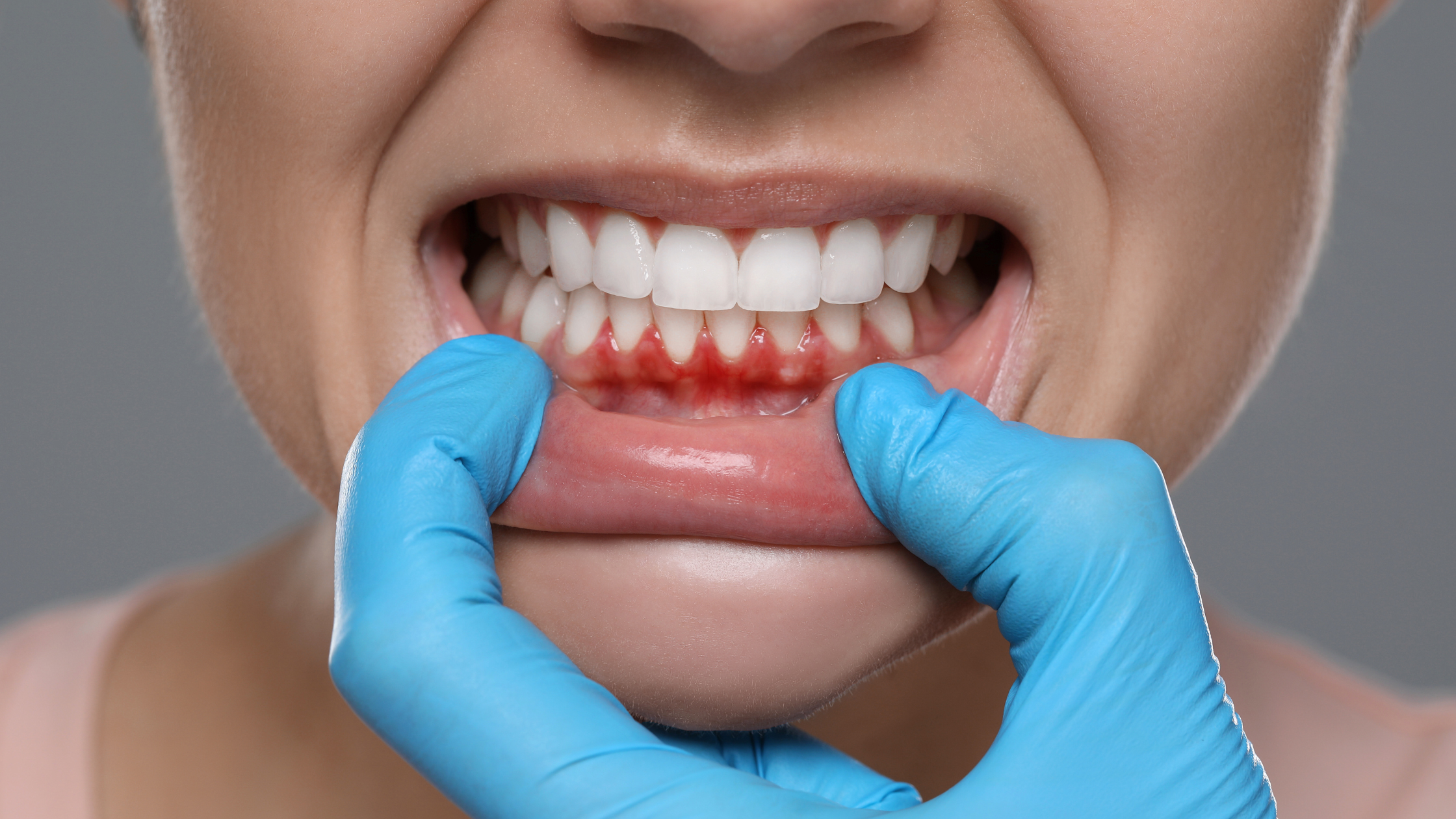
The disease progresses in stages. Gingivitis is the earliest and most reversible stage. At this point, the gums become red, swollen, and may bleed when you brush or floss. The bone and connective tissue holding your teeth are not yet affected. With proper care, gingivitis is fully treatable.
If gingivitis goes untreated, it can advance to periodontitis. At this stage, the gums begin to pull away from the teeth, forming pockets that trap bacteria deeper below the gumline. Over time, the infection starts to break down the bone and tissue that support the teeth. Without treatment, this eventually leads to loose teeth and, in severe cases, tooth loss.
Several factors increase a person’s risk of developing gum disease. These include smoking, uncontrolled diabetes, a family history of periodontal disease, certain medications that cause dry mouth, and poor oral hygiene habits. Stress and hormonal changes can also affect gum health.
Warning Signs to Watch For
Because gum disease often develops without pain, most patients rely on knowing the warning signs. Common indicators that your gums may need attention include:
- Gums that bleed when you brush or floss
- Gums that look red, puffy, or swollen rather than firm and pale pink
- Persistent bad breath that does not improve with regular cleaning
- Gums that appear to be pulling away from the teeth, making them look longer
- Sensitivity along the gumline or between teeth
- Teeth that feel loose or have shifted in position
- A change in how your bite fits together
If you notice any of these signs, the right step is to book an appointment with your dental team as soon as possible. Early intervention makes a real difference in how straightforward treatment is and how completely your gums can recover.
How Dentistry in Downtown Toronto Diagnoses Gum Disease
At Dental Arts on Front Street, every routine exam includes a periodontal assessment. Your dental team measures the depth of the pockets around each tooth using a small instrument called a periodontal probe. Healthy pockets measure between one and three millimetres. Pockets deeper than three millimetres signal that gum disease is present, and the deeper the pockets, the more advanced the condition.
Your dentist also checks for bleeding, gum recession, bone levels on X-rays, and any tooth mobility. Together, these findings give a complete picture of your periodontal health and determine which treatment approach is appropriate.
Scaling and Root Planing: The Core of Non-Surgical Gum Treatment
For patients with early to moderate gum disease, scaling and root planing (SRP) is the most commonly recommended non-surgical treatment. It goes deeper than a standard cleaning and directly addresses the infection below the gumline.
What Scaling Involves
Scaling removes plaque, tartar, and bacterial deposits from the tooth surfaces, including those below the gumline and within the periodontal pockets. At Dental Arts, the team uses both manual instruments (scalers and curettes) and ultrasonic scalers for this step. Ultrasonic scalers use high-frequency vibrations to break apart hardened tartar and biofilm with less mechanical pressure, which tends to reduce discomfort for patients.
What Root Planing Involves
Root planing smooths the surface of the tooth root after scaling. This step matters because rough root surfaces make it easier for bacteria to reattach and for plaque to accumulate again. Smoothing the root helps the gum tissue reattach more effectively and makes the area less hospitable to bacteria going forward.
What to Expect During the Appointment
SRP is performed one quadrant of the mouth at a time, with each session lasting approximately one hour. Local anaesthesia numbs the area before treatment begins, so patients stay comfortable throughout. Your dental team may also use a chlorhexidine rinse for additional antimicrobial protection and a desensitizing agent to reduce sensitivity after the appointment.
Most patients return for their remaining quadrants over the following visits, though in some cases multiple quadrants are treated at one appointment depending on the patient’s comfort and the extent of the disease.
What Happens After Scaling and Root Planing?
Following SRP, most patients notice improvement in their gum tissue within a few weeks. Bleeding on brushing reduces. Gums begin to look firmer and healthier. Pocket depths typically decrease as the tissue heals and reattaches to the tooth root.
Your dental team at Dental Arts will schedule a follow-up periodontal exam roughly six to eight weeks after your final SRP appointment to measure your progress. At this point, the team assesses whether gum health has stabilized or whether additional treatment may be needed.
For the majority of patients with early to moderate periodontitis, SRP produces significant improvement. Some patients with more advanced disease may need a referral to a periodontist (a gum specialist) for surgical management.
Periodontal Maintenance: Protecting Your Results Long-Term
Treating gum disease is not a one-time event. Once you have had periodontitis, the underlying susceptibility does not disappear. Bacteria can re-colonize periodontal pockets relatively quickly, which is why ongoing maintenance is essential.
After completing SRP, most patients at Dental Arts move to a periodontal maintenance schedule of every three months rather than the standard six-month interval. These visits involve targeted cleaning of the pocket areas, updated pocket depth measurements, and close monitoring of any changes in gum health. The goal is to catch any sign of recurrence early, before pockets deepen again or bone loss progresses.
Over time, and with consistent maintenance and good home care, many patients are able to extend the interval between maintenance visits. Your dental team will guide that decision based on how your gums respond and stabilize.
Home Care Habits That Support Gum Health
Professional treatment works best when patients support it with strong daily habits at home. Here is what effective gum care looks like between visits:
- Brush at least twice daily using a soft-bristled toothbrush, angling the bristles slightly toward the gumline to clean below it
- Floss daily or use an interdental brush or water flosser to clean between teeth and along the gumline
- Use an alcohol-free antibacterial mouthwash to reduce bacterial load in the mouth
- Avoid or quit smoking, since smoking significantly impairs gum healing and increases the risk of reinfection
- Manage any underlying health conditions, such as diabetes, that can affect your gum tissue’s ability to heal
Your dental team will review your specific home care routine at each visit and offer personalized guidance based on how your gums are doing. Small adjustments to technique can make a meaningful difference over time.
The Link Between Gum Health and Overall Health
Gum disease is not just an oral health issue. Research has established clear links between periodontal disease and broader systemic health conditions. The Public Health Agency of Canada recognizes gum disease as a risk factor associated with cardiovascular disease, diabetes complications, and adverse pregnancy outcomes.
The connection works in both directions. Gum disease increases systemic inflammation, which can worsen conditions like heart disease and diabetes. Conversely, poorly controlled diabetes makes the body less able to fight infection, which allows gum disease to progress more quickly. Managing gum health is, in this sense, part of managing your overall health.
This is one of the reasons that dentistry in downtown Toronto at Dental Arts takes periodontal health so seriously. Healthy gums are not cosmetic. They are foundational to your long-term wellbeing.
Book Your Periodontal Assessment at Dental Arts
If your gums have been bothering you, or if it has been a while since your last dental exam, now is a good time to come in. The team at Dental Arts on Front Street offers thorough periodontal assessments, evidence-based treatment, and the ongoing support your gums need to stay healthy.
Dental Arts accepts patients covered under the Canadian Dental Care Plan (CDCP) and offers flexible payment options to make treatment accessible. We are currently welcoming new patients at our downtown Toronto location.
Call us at (416) 551-4401 or visit us at 350 Front St W in Toronto to book your appointment. Early treatment leads to better outcomes, so do not wait until symptoms become severe.