



What Are Tongue Ties and Lip Ties?
Signs Your Child May Need an Assessment
In babies, common signs include trouble latching, long or painful feeds, clicking sounds while nursing, poor weight gain and reflux-like symptoms. In older children, watch for speech difficulties, picky or messy eating, mouth breathing and a gap between the front teeth. Our pediatric dentistry team checks for ties during routine visits. However, a focused assessment gives you clear answers and a plan.
Tongue Tie Treatment in Toronto: What to Expect
Lip Tie Assessment and Treatment
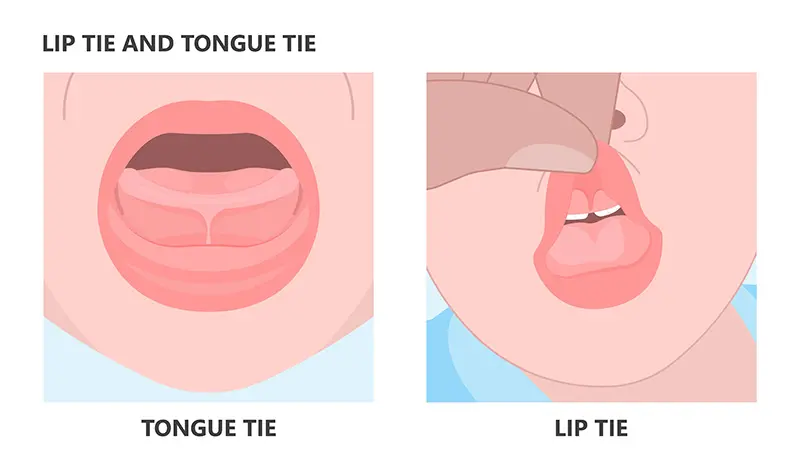
Lip ties deserve just as much attention as tongue ties. A tight upper lip frenum can make it hard for a baby to flange the lip while feeding. This often leads to a shallow latch, swallowed air and fussy feeds. In older children, a lip tie can pull on the gums, create a stubborn gap between the front teeth and trap food along the gum line. As a result, some kids develop cavities on their upper front teeth even with good brushing.
The good news? Assessment and treatment work the same way as they do for tongue ties. We examine how the lip moves and how it affects feeding, teeth and gums. If a release is needed, the same quick frenectomy procedure frees the tight tissue. Many families have both a tongue tie and lip tie released in a single visit.
Do Adults Need Tongue Tie Treatment Too?
Yes, sometimes. An untreated tie can contribute to jaw tension, poor tongue posture, speech habits and even snoring. Some adults also struggle to clean their teeth properly around a tight frenum. If any of this sounds familiar, an assessment is a simple first step. Adult ties can also play a role in jaw pain, so we may discuss TMJ treatment where it applies.
Frequently Asked Questions About Tongue and Lip Ties
Is a frenectomy painful for my baby?
Discomfort is brief and mild for most infants. The procedure takes only minutes, and many babies feed right afterward. In fact, feeding often improves quickly once the restriction is released.
Will a tongue tie fix itself over time?
No, a tie does not go away on its own. That said, not every tie causes problems. Some children adapt well and never need treatment. This is why a proper assessment matters before any decision is made.
What happens if a lip tie is left untreated?
It depends on how severe it is. Possible issues include feeding troubles, a gap between the front teeth, gum recession and cavities near the gum line. An assessment tells you whether watchful waiting or treatment is the better path.
Tongue Tie Treatment in Toronto: Our Two Locations
We offer this treatment at both of our Toronto clinics.
- Downtown, Dental Arts At Front: 350 Front St W, Toronto, ON M5V 3W7 | (416) 551-4401
- Uptown, Dental Arts at Lawrence: 485 Lawrence Ave W, Toronto, ON M5M 1C6 | (416) 703-5244
Book a Tongue Tie Assessment
Wondering whether your child, or you, could benefit from tongue tie treatment in Toronto? Contact Dental Arts Toronto to book an assessment at our Uptown or Downtown clinic. We will examine the tie, explain your options and help you choose the right path forward.