
Jaw pain can build during the day if you clench your teeth or repeatedly work the chewing muscles. However, evening pain does not automatically mean you have a temporomandibular disorder, or TMD. Problems involving teeth, jaw joints, muscles or other medical conditions can overlap, so persistent or worsening pain needs an assessment.
If you are looking into TMJ treatment because your jaw feels tired by dinner, start with the pattern you have noticed. When did it begin? Does eating change it? Is it an ache in the cheek, pain near the ear or discomfort around one tooth? Those observations are useful without turning them into a diagnosis.
What the timing can and cannot tell you
Timing gives a clinician context. A jaw that feels comfortable when you wake but sore after a long afternoon presents a different history from pain that wakes you at night. Neither pattern identifies the cause on its own, and some people experience symptoms at several points in the day.
There is also a distinction between TMJ and TMD. TMJ refers to the jaw joint; TMD describes disorders involving the joint or the muscles that move the jaw. People often use “TMJ” as shorthand for jaw pain, but that shorthand does not explain what is happening in an individual case.
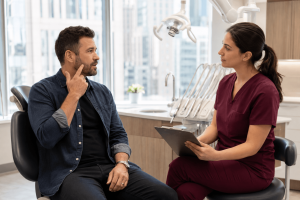
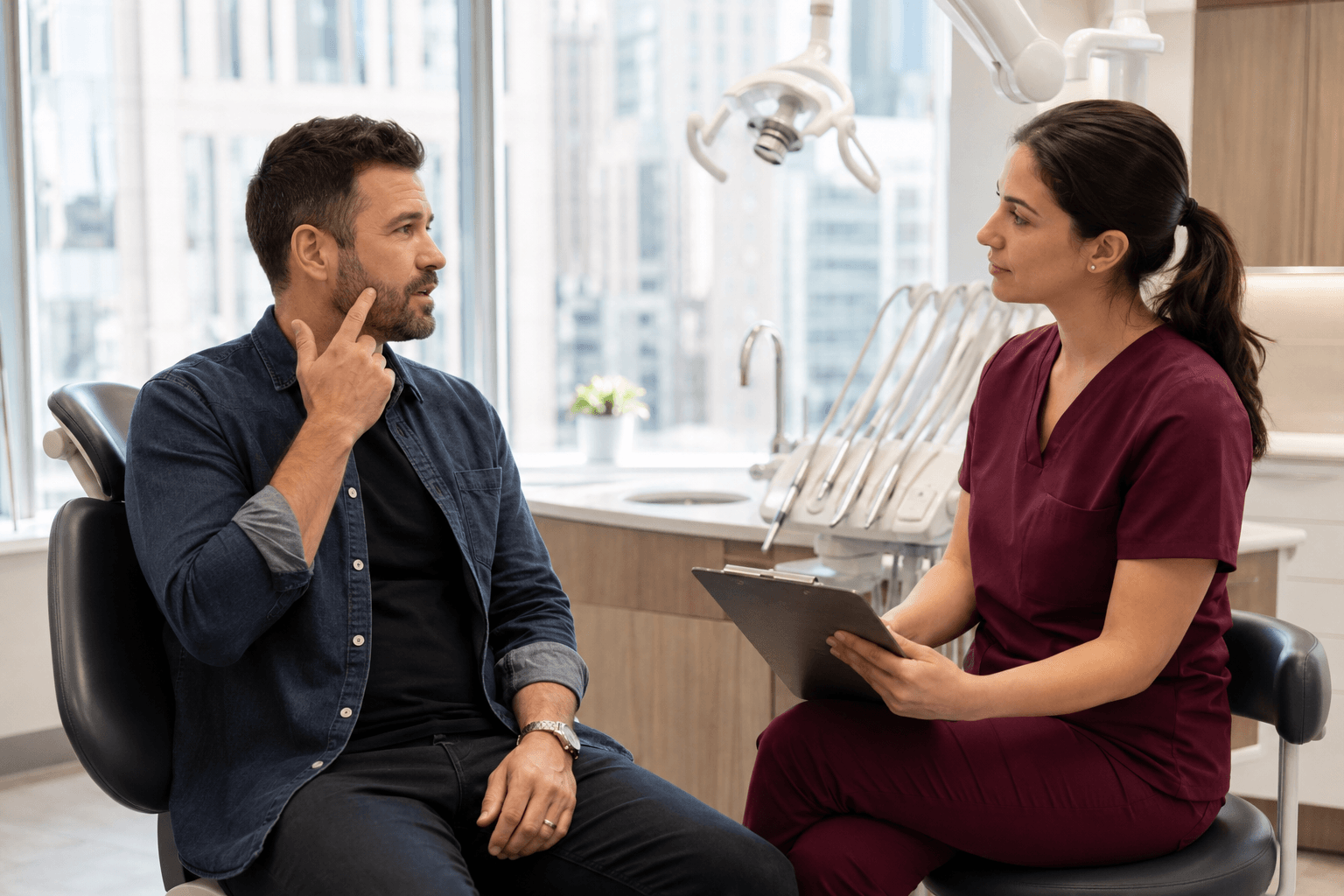
Try to describe the change rather than label it. “My left cheek starts aching after lunch, and chewing dinner makes it worse” gives the dentist more to investigate than “my bite must be wrong.” It is equally useful to say when there is no clear connection to meals or activity.
Do not assume that stress explains everything simply because the discomfort appears during a demanding week. Stress may be relevant to habits such as clenching, but your symptoms still deserve attention. A schedule pattern should help guide questions, not close off other explanations.
Daytime habits worth noticing
You can clench without making a grinding sound. Some people notice their teeth pressed together while answering emails, driving or concentrating. According to the NIDCR’s information on bruxism, clenching and grinding can happen while awake as well as during sleep, and may be associated with jaw soreness or tiredness.
For a few ordinary moments during the day, notice what your jaw is doing. Are you holding it tense? Have you been chewing gum for a long stretch? Do you bite a pen or your nails? Report these habits if they apply, without assuming any one of them fully explains the pain.
You do not need to monitor yourself constantly or keep testing whether it still hurts. Repeatedly opening wide, clenching hard or chewing something tough to reproduce the symptom may make an already uncomfortable area feel worse. Observations from normal activities are enough.
A useful change to discuss is reducing unnecessary chewing or clenching. Avoid online routines that promise to realign your jaw, permanently correct your bite or cure pain through a particular posture. Advice should fit the findings from your assessment, especially if movement is restricted or a recent injury is involved.
Keep a useful symptom record
A short note on your phone can make the appointment conversation more precise. Record when the discomfort starts, where you feel it and what you were doing beforehand. There is no need for a detailed hour-by-hour diary.
For example: “Fine at breakfast. Ache in right cheek by mid-afternoon. Hard to finish a crusty sandwich. No swelling. Opening felt tighter than usual.” That note captures a change a clinician can ask about without claiming to know its cause.
Useful details include:
- When you first noticed the problem and whether it is becoming more frequent.
- Whether it affects one side, both sides or a particular tooth.
- Whether chewing, yawning or speaking changes the discomfort.
- Any painful clicking, catching, locking or change in mouth opening.
- Headaches, ear symptoms, swelling, fever or a recent injury.
- What you have tried, including appliances and any medicines you have taken.
Record effects on daily life too. Having to abandon a meal or avoiding conversation because it hurts matters even if you find it difficult to rate the pain on a number scale. Bring an existing guard to the appointment if you have one, and explain whether symptoms change when you use it.
When to seek prompt help
Arrange an assessment if pain keeps returning, is worsening or makes it difficult to eat or open your mouth. Tell the office about restricted movement or locking when you call so the team can advise you about timing. Do not force a stuck jaw or try to push it back into position yourself.
Facial swelling, fever, a painful tooth or symptoms after an injury also need prompt attention. These details may change which service you need and how quickly you should be seen. If you have trouble breathing or swallowing, seek emergency medical care rather than waiting for a routine dental booking.
Jaw pain can sometimes be part of a medical emergency. Heart & Stroke lists jaw discomfort among possible heart attack signs. Jaw pain accompanied by chest pressure, shortness of breath, sweating, nausea or other sudden concerning symptoms warrants calling 911. Don’t assume it is a dental problem because you have had jaw aches before.
For a recurring, non-emergency ache, you do not have to wait until it becomes severe to ask for advice. Explain both the current symptoms and how they have changed.
What a jaw assessment may clarify
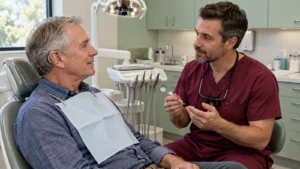
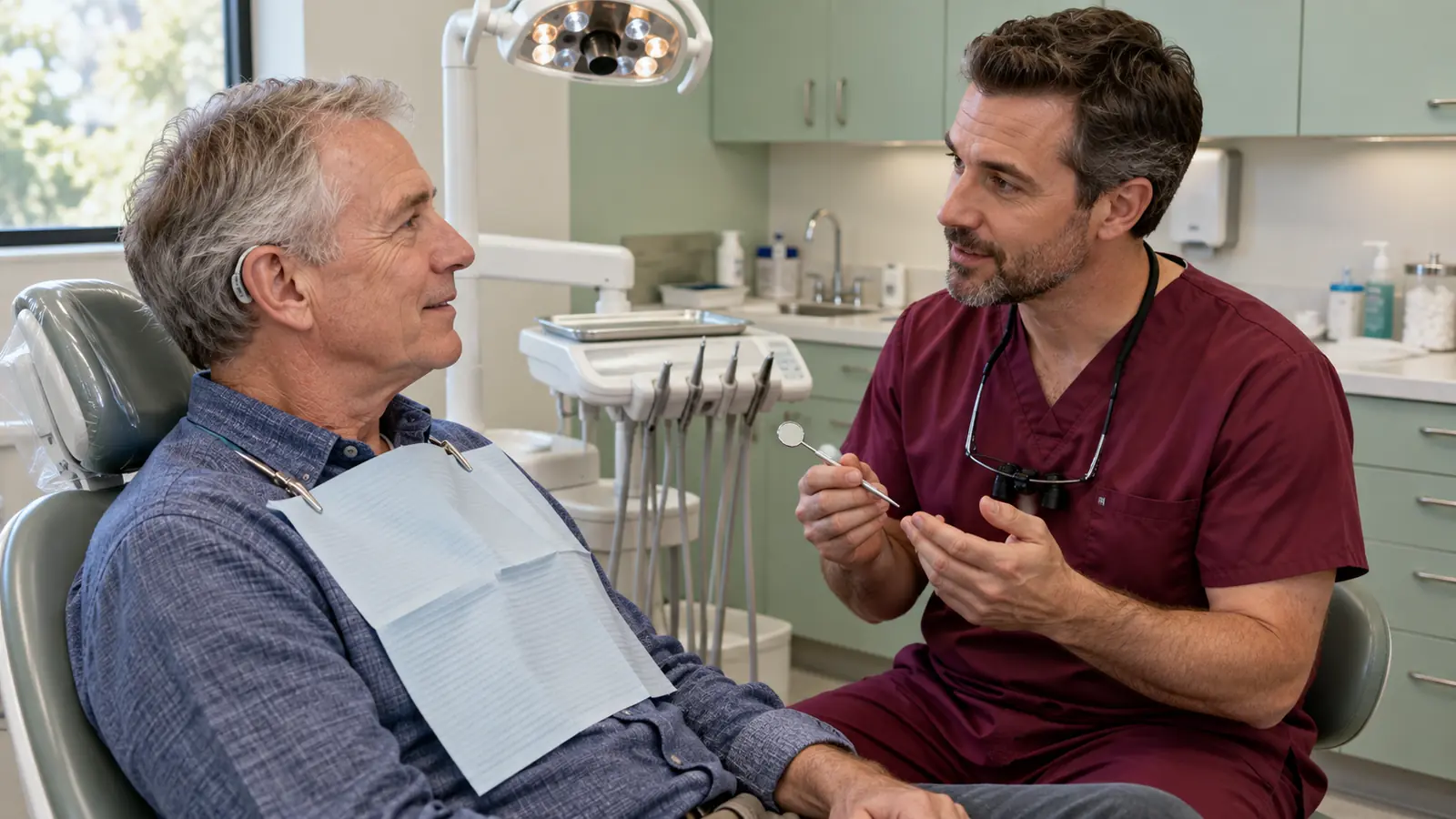
An assessment can help determine whether the findings point toward the chewing muscles, the joint, a tooth or another possible source. The clinician will need your history and an examination; imaging or referral may be appropriate in some situations. Not every person needs the same tests.
The NIDCR’s guidance on temporomandibular disorders emphasizes that facial and jaw pain can have different causes. It generally favours conservative approaches and cautions against treatments that permanently change the teeth, bite or joints without adequate justification. Painless clicking alone usually does not require treatment.
A jaw assessment should lead to an explanation, not an automatic purchase. If an appliance is proposed, ask what it is intended to do in your case and how its effect will be reviewed. Protecting teeth and treating pain are related but different goals; a guard is not a guaranteed solution for every jaw complaint.
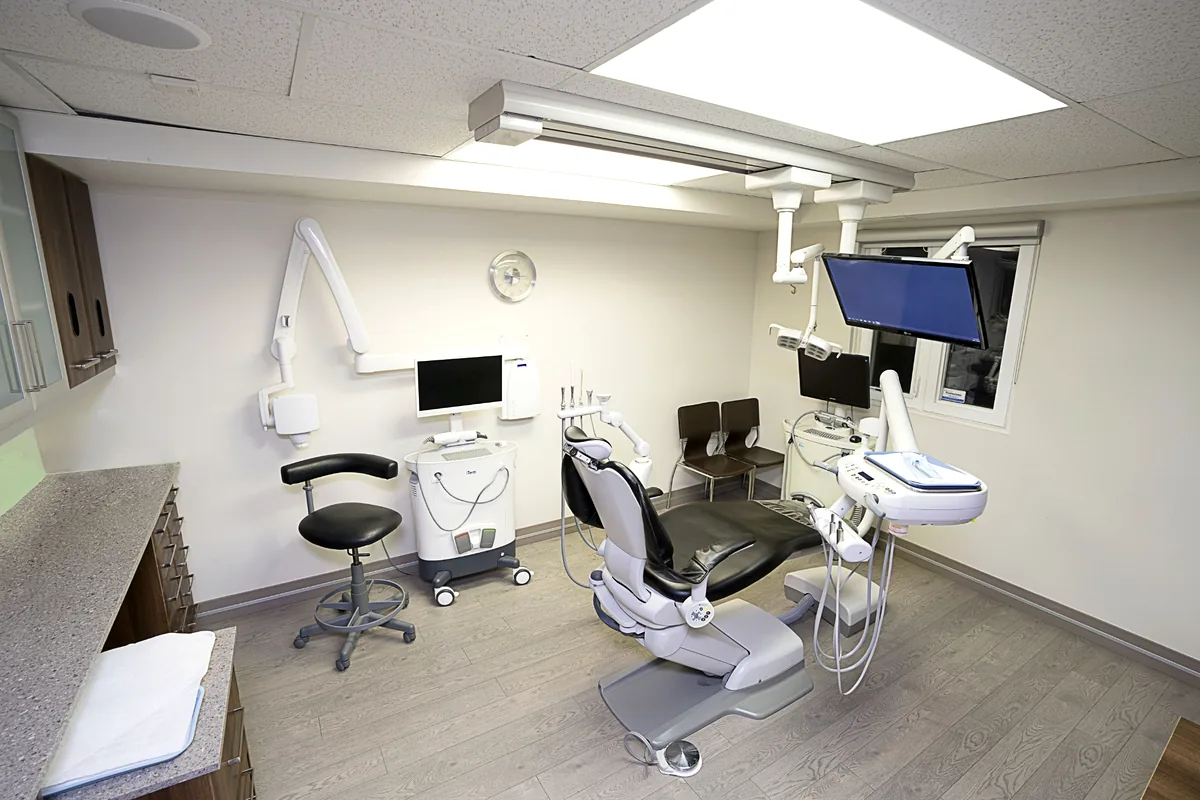
You can read the TMJ information from Dental Arts before contacting the practice. If you live or work downtown, ask about an assessment at the Front Street West office. Confirm the appropriate appointment directly rather than assuming a particular treatment will be offered at your first visit.
Questions about next steps and follow-up
Before agreeing to a plan, make sure you understand what the clinician thinks is happening and what remains uncertain. You should be able to distinguish a working explanation from a confirmed finding. Ask how the suggested next step will help clarify or address the problem.
A few questions can keep the discussion practical:
- What findings support your recommendation?
- Are there reversible measures I should try first?
- What should I avoid while we are assessing this?
- How will we judge whether the plan is helping?
- When should I return, and what would mean I should call sooner?
- Would a medical assessment or referral be useful?
Discuss everyday goals, such as getting through a meal comfortably or opening your mouth without pain. If an approach helps one symptom but another is getting worse, tell the clinician. Follow-up is a chance to reconsider the plan with better information, not simply repeat the same advice indefinitely.
Ask for instructions you can refer to at home. Written instructions are especially helpful if more than one clinician is involved, so you know who is overseeing each part of care.
Frequently asked questions
Can I clench my jaw without noticing?
Yes. Awake clenching may happen during concentration without an obvious grinding sound, and the NIDCR notes that clenching or grinding while awake is more common than during sleep. Mention when you notice it and whether your jaw feels tired afterward.
Does evening jaw pain always mean TMD?
No. The time of day alone cannot establish a diagnosis. Explain the location, triggers and associated symptoms to a dentist or appropriate clinician, especially if the discomfort persists, worsens or affects eating and jaw movement.
Should I buy a night guard before an assessment?
It is better to ask what is causing the symptoms before choosing an appliance. A product sold for grinding may not address your particular concern. If you already use a guard, bring it and explain any pain, fit problems or changes you have noticed.
Is painless clicking a reason for treatment?
Usually not. Painless clicking or popping is common, and without restricted movement it generally does not require treatment on its own. Mention it at your dental visit, but seek advice sooner if clicking becomes painful, your jaw locks or you develop difficulty opening or closing it.
What symptoms should I tell the dentist about?
Describe when the pain began, where it occurs, what changes it and how it affects meals or other activities. Include injuries, locking, swelling, headaches, relevant health history and anything you have already tried. A brief symptom note is enough.
Discuss your questions with Dental Arts
If jaw discomfort keeps building through your day, contact Dental Arts about an assessment at the office at 350 Front Street West in downtown Toronto. Describe the timing and any movement difficulties when booking. The next step is to understand the cause and discuss an appropriate plan for your findings.