
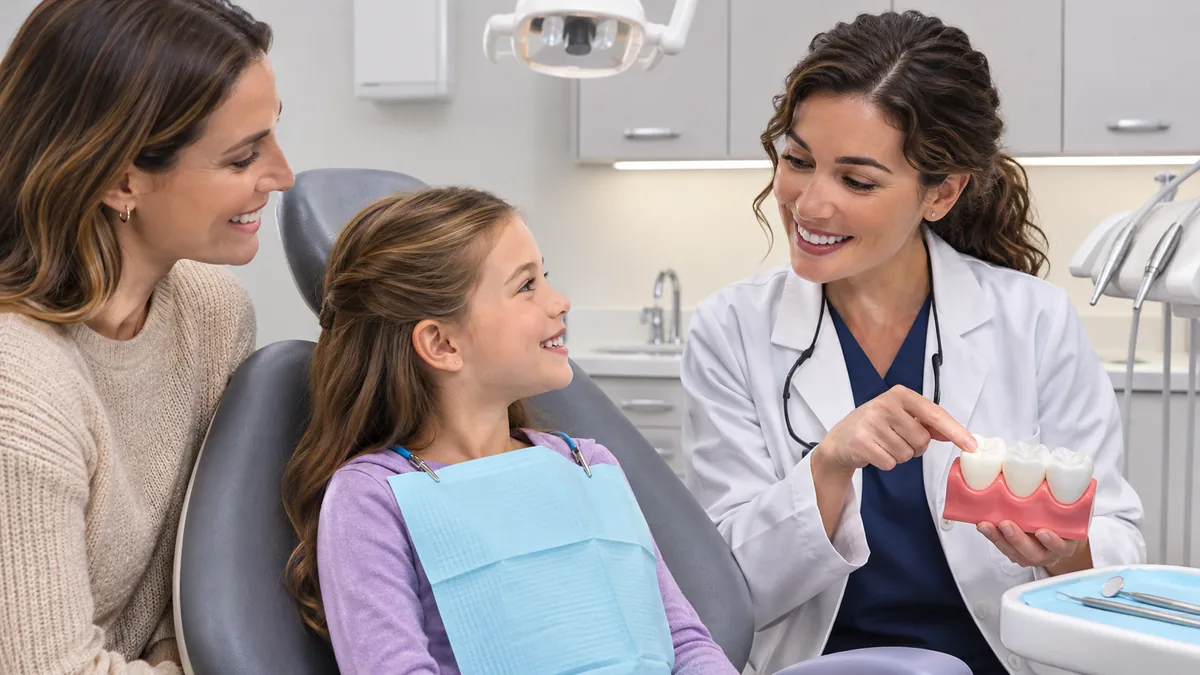
Dental sealants can be a useful extra layer of cavity protection for some children, especially when permanent molars have deep grooves that are difficult to keep clean. But they are not automatically necessary for every child. A dentist should look at the shape of the teeth, the child’s cavity history and overall risk before recommending them.
For families near Lawrence Avenue, Dental Arts at Lawrence offers dental sealants as part of preventive care for children and teens. The goal is not to replace good brushing or regular checkups. It is to protect specific tooth surfaces that may be more vulnerable to decay.
What Dental Sealants Actually Do
A dental sealant is a thin protective coating placed on the chewing surface of a back tooth. Molars naturally have pits and grooves where food and plaque can collect. Some of those grooves are narrow enough that toothbrush bristles have trouble reaching all the way into them.
A sealant covers those grooves and creates a smoother surface that is easier to keep clean. The Canadian Dental Association supports the selective use of sealants based on a dentist’s assessment of cavity risk, as part of a broader preventive program that also includes oral hygiene, fluoride exposure, nutrition and regular dental exams.
That distinction matters. Sealants are preventive. They are not a substitute for treating a cavity that is already present, and they do not mean a child can skip brushing, flossing or routine dental care.
Which Children Are Most Likely to Benefit From Sealants?
There is no single age or checklist that makes sealants necessary. Dentists look at the child and the tooth in front of them.
A dentist may be more likely to discuss dental sealants for kids when:
- Permanent molars have recently erupted and have deep pits or grooves.
- A child has had cavities before or appears to be at higher risk for new decay.
- The chewing surfaces of the molars are difficult to clean thoroughly.
- Plaque tends to collect in grooves despite otherwise reasonable home care.
- A particular tooth has anatomy that makes the pits and fissures especially vulnerable.
Dental Arts’ sealants service page notes that children with newly erupted molars and teenagers with higher cavity risk may be candidates. The final recommendation still depends on an individual dental exam.
If your child has never had a cavity, that does not automatically rule sealants in or out. A dentist may still find that a newly erupted molar has deep grooves worth protecting, or may decide that the child’s risk is low and monitoring is reasonable.
Why Timing Matters When Permanent Molars Come In
First permanent molars often arrive around age six, and second permanent molars commonly appear around age twelve. These teeth erupt behind the baby teeth, so parents do not always realize a new adult tooth has appeared.
The period soon after eruption can be a useful time to ask about sealants because the chewing surface is new and may have deep grooves that are difficult for a child to clean consistently.
Age alone is not the deciding factor. One six-year-old may have molars with pronounced pits and a history of decay, while another may have shallower grooves and low cavity risk. A family dentist can look at the actual tooth and make a recommendation based on what is present.
Parents do not need to track eruption dates perfectly at home. Regular dental visits give the dental team a chance to notice when permanent molars are coming in and discuss prevention at the right time.
Sealants and Fluoride Do Different Jobs
Parents sometimes wonder whether a child who uses fluoride toothpaste still needs sealants. These preventive tools work in different ways.
Fluoride helps strengthen tooth enamel and makes it more resistant to acid attack. Sealants create a physical barrier over the pits and grooves of certain chewing surfaces. A child may benefit from one, both or neither beyond routine home care, depending on individual risk.
The Canadian Dental Association describes sealants as one part of comprehensive prevention rather than a replacement for fluoride, brushing or dental exams.
This is also why “my child brushes twice a day” is not always the whole answer. Good brushing is essential, but deep grooves can still be difficult to clean. The question is not whether a child is brushing well enough. It is whether a particular tooth has a surface that may benefit from extra protection.
What Happens During a Sealant Appointment?
Sealant placement is generally straightforward. The tooth needs to be clean and dry so the material can bond properly. The surface is prepared, the liquid sealant is placed into the grooves and it is hardened as needed. The dentist then checks the tooth and the child’s bite.
The procedure is focused on the outer chewing surface of the tooth. For an intact tooth receiving a preventive sealant, the Canadian Dental Association describes the process as quick, simple and painless.
That can make sealants easier to discuss with children who feel nervous about dental treatment. Parents can explain that the goal is to protect the tooth before a filling is needed, rather than waiting for a problem to develop.
If a dentist sees a suspicious area or possible decay, the plan may be different. The tooth should be assessed rather than assuming a sealant is the correct next step.
How Sealants Fit Into Ongoing Family Dental Care
Sealants are not a one-time replacement for preventive visits. They should be checked during routine dental exams so the dentist can see whether they remain intact and whether the surrounding tooth is healthy.
At home, children still need consistent brushing with age-appropriate toothpaste, flossing where teeth touch and support from parents as their skills develop. Food and drink habits also matter because cavity risk is affected by more than one factor.
This is where family dentistry can be useful. The same visit can address how well a child is cleaning, whether permanent teeth are erupting normally, whether fluoride or sealants may be appropriate and whether any areas need closer monitoring.
Dental Arts at Lawrence also provides pediatric dentistry for children and teens, including preventive services and routine dental care. Families looking for an Uptown Toronto dental office on Lawrence Avenue can discuss these options as part of an individual exam rather than trying to decide from age alone.
Questions Uptown Toronto Parents Often Ask About Dental Sealants
Does every child need dental sealants?
No. Dental sealants should be recommended selectively based on the child’s teeth and cavity risk. Some children have deep molar grooves or a history that makes sealants more useful, while others may not need them.
Can sealants be placed on baby teeth?
They can be considered for primary teeth in some situations. The Canadian Dental Association supports selective sealant use for both primary and permanent teeth when a dentist determines that the tooth is at risk. The decision depends on the individual child and tooth.
Do sealants replace brushing and fluoride?
No. Sealants protect specific pits and grooves on certain teeth. Brushing, flossing, appropriate fluoride exposure, healthy food choices and routine dental visits still play separate roles in preventing tooth decay.
What if my child already has a cavity?
A tooth with suspected decay needs a dental assessment. Sealants are used preventively on appropriate tooth surfaces, while an existing cavity may require monitoring or restorative treatment depending on its size and progression. A dentist can determine what is appropriate after examining the tooth.
Ask Dental Arts at Lawrence About Dental Sealants
If your child’s permanent molars are coming in, you have noticed deep grooves on the back teeth, or you simply want to understand their cavity risk, you do not have to decide about sealants on your own.
Dental Arts at Lawrence can assess your child’s teeth and explain whether dental sealants make sense as part of their preventive care. If your family is looking for care near Lawrence Avenue and Bathurst Street, contact Dental Arts at Lawrence to request an appointment and discuss the next step.