A custom night guard and therapeutic Botox can both come up in conversations about jaw clenching, but they do not do the same job. A night guard mainly protects the teeth and helps manage the forces created by grinding or clenching during sleep. Therapeutic Botox may be considered when overactive jaw muscles are contributing to tension, soreness or clenching.
Neither option is automatically “better.” The right approach depends on what is happening in your mouth and jaw, whether your teeth are showing wear or damage, when the clenching occurs and what other symptoms are present. A dental assessment is the best way to sort out which goal needs attention first.
Night Guards and Therapeutic Botox Do Different Jobs
The simplest way to compare them is to start with purpose.
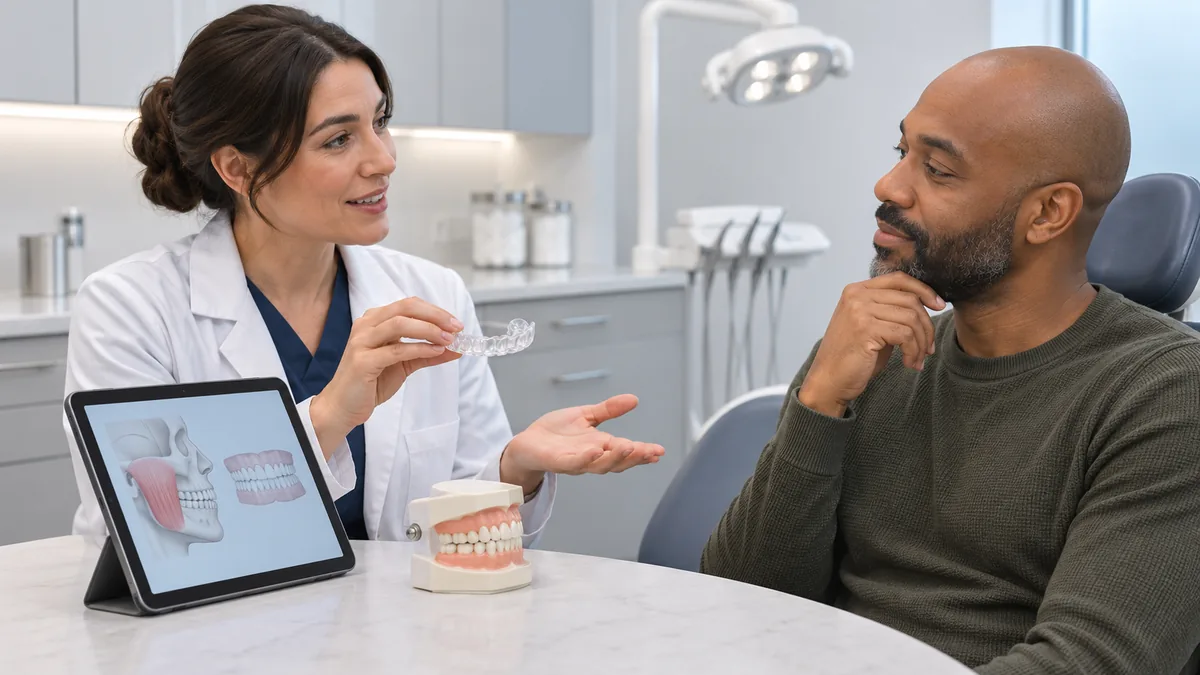
A custom night guard is a physical appliance worn over the teeth. For someone who clenches or grinds at night, it creates a barrier between the upper and lower teeth and can help distribute pressure. The Canadian Dental Association notes that dentists may recommend a custom mouth guard for sleep-related grinding to protect teeth from damage.
Therapeutic Botox takes a different approach. Dental Arts offers therapeutic Botox in Toronto for appropriate patients with jaw clenching, TMJ-related muscle tension and certain other concerns. Instead of placing a barrier over the teeth, treatment is directed at overactive muscles.
That means the two options are not interchangeable. One is primarily about protecting teeth and managing bite forces. The other is a muscle-focused treatment that may be considered after an individual assessment.
How a Custom Night Guard Can Help With Clenching
If you grind or clench during sleep, custom night guards can protect the tooth surfaces from repeated tooth-to-tooth contact. That matters because ongoing bruxism can contribute to worn enamel, chipped teeth, fractured restorations, sensitivity and soreness in the jaw muscles.
A custom guard is designed to fit your bite more precisely than a generic over-the-counter product. Dental Arts provides custom night guards for patients with grinding, clenching and related TMJ concerns.
It is also useful to understand what a night guard does not necessarily do. Wearing a guard does not mean the clenching habit itself has stopped. You may still activate the jaw muscles while sleeping. The appliance is there to change how those forces are absorbed and to help protect the teeth.
For some patients, that protective role is the main priority. If a dentist sees tooth wear, cracks, damaged restorations or other signs that clenching is affecting the teeth, an appliance may be part of the conversation even if muscle pain is not the most noticeable symptom.
How Therapeutic Botox May Be Used for Jaw Clenching
Jaw clenching can involve muscles that stay highly active or tense for long periods. Dental Arts offers therapeutic Botox as one treatment option that may be considered when muscle overactivity is contributing to clenching, facial tension or TMJ-related discomfort.
The goal is different from a night guard. Rather than placing something between the teeth, therapeutic Botox is used to reduce activity in selected muscles. Whether that is appropriate depends on the person’s symptoms, health history and dental findings.
This is why Botox should not be treated as a shortcut or a universal answer to grinding. Jaw pain can have more than one cause. Tooth problems, joint issues, sleep-related grinding, stress-related daytime clenching and other factors can produce similar symptoms. A dentist needs to understand what is driving the problem before discussing a treatment plan.
For patients whose symptoms are part of a broader jaw concern, Dental Arts also provides TMJ treatment that may include different approaches depending on the findings.
Night Guard vs. Therapeutic Botox: How They Compare
If you are trying to decide between the two, it helps to compare the purpose rather than simply asking which treatment is stronger.
Purpose:
A night guard is mainly used to protect teeth and manage the mechanical effects of clenching or grinding. Therapeutic Botox is a muscle-focused option that may be considered when overactive jaw muscles are contributing to symptoms.
When it may come up:
A night guard may be discussed when there is evidence of sleep-related grinding, tooth wear or pressure on teeth and restorations. Therapeutic Botox may be discussed when muscle tension, clenching or related discomfort is a significant part of the problem.
What you do between visits:
A night guard has to be worn as instructed and kept clean. It also needs to be checked for fit and wear. Therapeutic Botox does not involve a removable appliance, but its effects are temporary and future treatment decisions depend on how the patient responds and what the dentist recommends.
Limitations:
A night guard does not automatically stop the muscles from clenching. Therapeutic Botox does not physically shield the teeth from contact. Neither option replaces a proper diagnosis or addresses every possible cause of jaw pain.
The most useful question is not “Which one wins?” It is “What problem are we trying to solve?”
Could You Need Both?
Sometimes the goals overlap. A person may need protection for worn teeth while also having significant jaw-muscle tension. Because a night guard and therapeutic Botox address different parts of the problem, a dentist may discuss more than one approach in selected cases.
That does not mean everyone who clenches needs both. Some people may do well with an appliance and monitoring. Others may need treatment aimed at a different cause entirely. Some may be candidates for muscle-focused care after assessment.
The point of comparing the options is not to build a treatment package before the exam. It is to understand why a dentist might recommend one approach, another approach or a combination based on the findings.
Signs It Is Worth Asking a Dentist About Jaw Clenching
Clenching is not always obvious, especially when it happens during sleep. The Canadian Dental Association notes that signs can include jaw or facial aching, headaches, tooth sensitivity and fractured or damaged teeth.
It is worth bringing up clenching with a dentist if you notice:
- Jaw soreness or stiffness, especially after waking or later in the day.
- Frequent tension around the temples or sides of the face.
- Morning headaches that occur along with jaw discomfort.
- Teeth that look flattened, chipped or more worn than before.
- Tooth sensitivity without an obvious explanation.
- Cracked fillings, crowns or other dental work.
- A partner who hears grinding while you sleep.
- A habit of holding your teeth tightly together while working, driving or concentrating.
These signs do not prove that bruxism is the cause. They are reasons to have the teeth and jaw examined rather than trying to choose a treatment based on symptoms alone.
What a Dental Assessment Looks For
An assessment for clenching is about understanding the pattern, not simply confirming that the jaw feels tense.
A dentist may look for wear on the biting surfaces of the teeth, cracks or stress on restorations, tenderness in the jaw muscles and changes in how the jaw moves. Your description of when symptoms happen also matters. Daytime clenching and sleep-related grinding may feel similar but can have different triggers and management strategies.
The dentist may also consider whether the symptoms fit a broader TMJ problem or whether another dental issue could be causing pain. That step is important because a sore jaw does not automatically mean a night guard or Botox is the correct treatment.
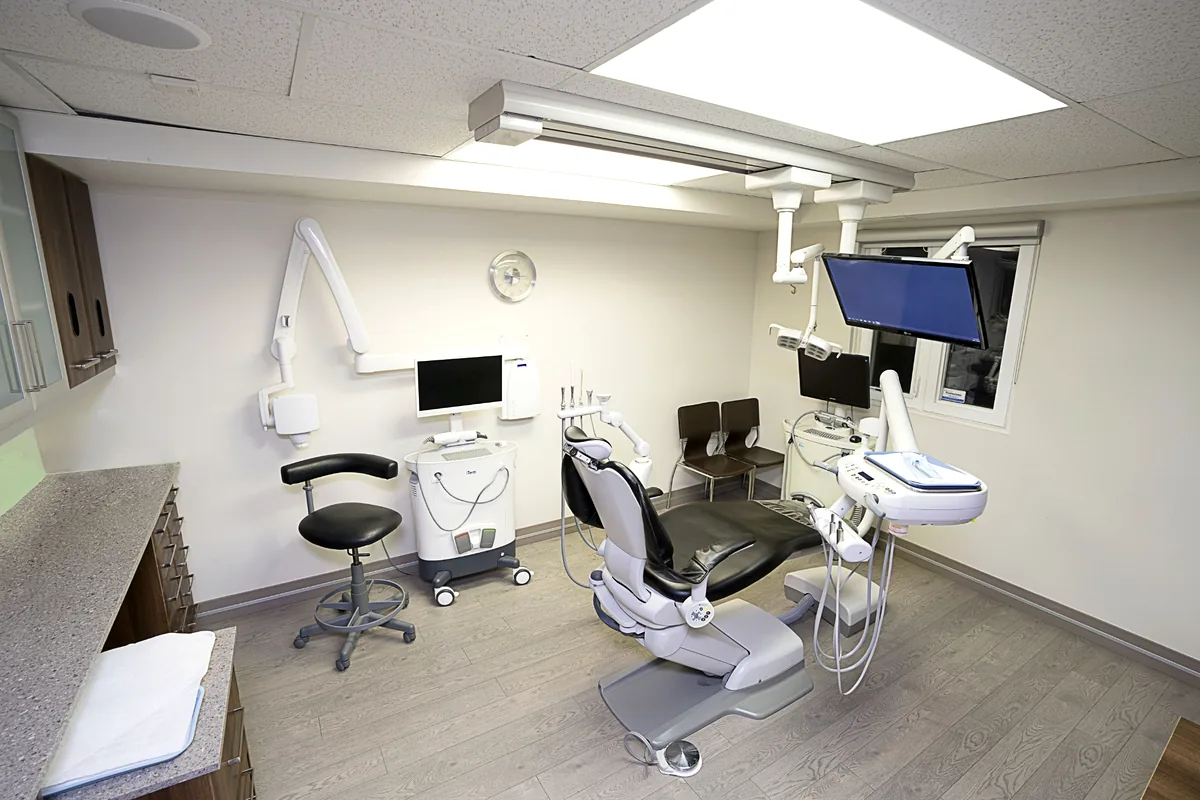
For people working or living near Front Street, Dental Arts at Front is a Downtown Toronto dental office on Front Street where these concerns can be assessed alongside general dental care.
Questions Downtown Toronto Patients Often Ask About Clenching Treatment
Will a night guard stop me from clenching?
Not necessarily. A night guard can protect the teeth and help manage the forces created by grinding or clenching, but you may still activate the jaw muscles while wearing it. The dentist can explain what the appliance is intended to accomplish in your specific case.
Is therapeutic Botox better than a night guard?
Not as a general rule. The two options have different purposes. A night guard protects the teeth mechanically, while therapeutic Botox may be considered when overactive muscles are an important part of the problem. The better choice depends on what the assessment shows.
How do I know if I grind my teeth at night?
You may notice morning jaw soreness, headaches, tooth sensitivity or visible wear, and a partner may hear grinding sounds. Some people have very few symptoms. A dentist can look for physical signs on the teeth and restorations that may suggest bruxism.
Can stress make clenching worse?
Yes, stress and anxiety can contribute to awake clenching for some people, and the Canadian Dental Association lists stress and anxiety among factors that can aggravate bruxism. If you catch yourself holding your teeth together during focused or stressful periods, mention that pattern during your dental visit.
Talk to Dental Arts at Front About Jaw Clenching
If you are comparing a night guard with therapeutic Botox, the most useful next step is to find out what your teeth, jaw joints and muscles are actually showing.
Dental Arts at Front can assess jaw clenching, tooth wear and related symptoms and explain which treatment options may be appropriate. If you are looking for care in Downtown Toronto near Front Street, contact Dental Arts at Front to request an appointment and discuss the right next step for your situation.